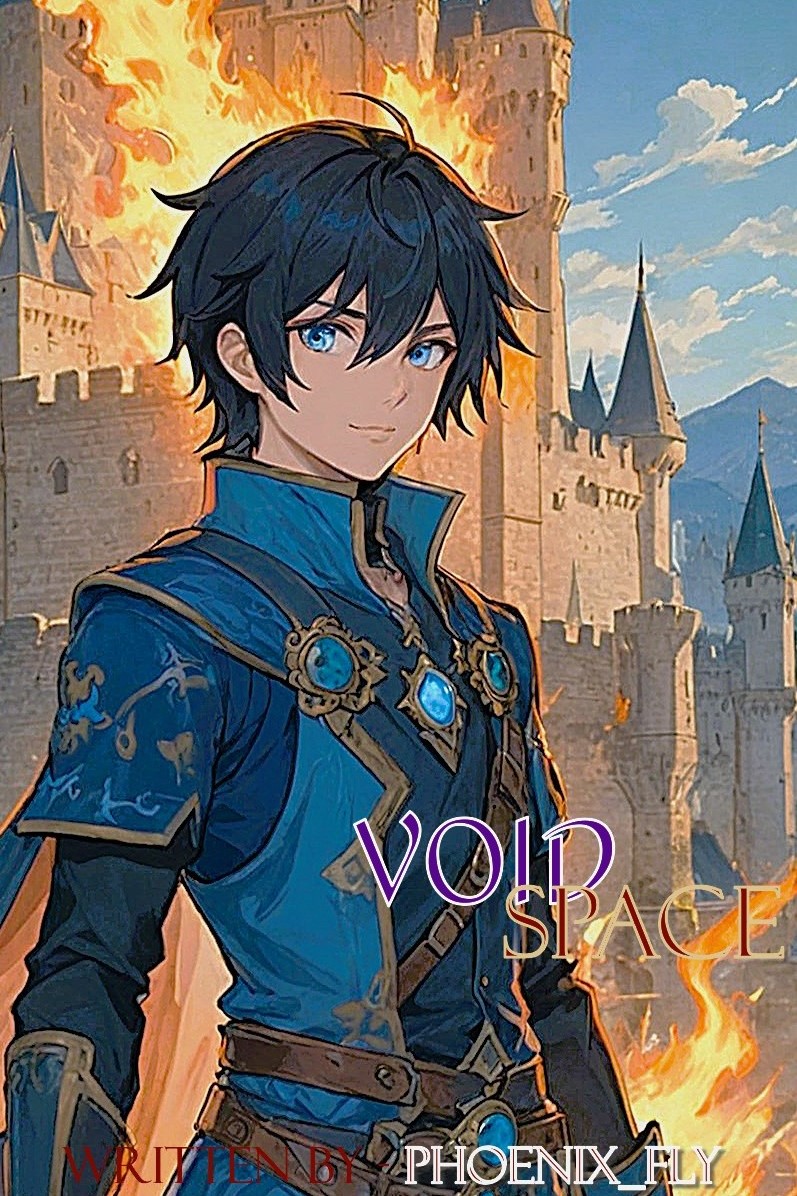


The village of Ashvara didn’t hate Indra.
That would’ve required effort.
They simply… forgot him. Mid-sentence sometimes. A shopkeeper would look straight at him, mouth open, ready to say get out — and then his eyes would glaze, slide sideways, like Indra was a smudge on glass and not a seventeen-year-old boy standing three feet away. It happened so often that Indra had stopped finding it strange. Stopped finding it anything, really.
He existed in the cracks of the world. Between the moments people remembered to look.
The morning of the Marking Ceremony, he woke before dawn.
Not from excitement. He hadn’t felt that particular emotion in — he tried to remember. Couldn’t. No, he woke because the cold got into the shed through the gap in the eastern wall, the one Headman Duvara had promised to fix four winters ago, the one that would never be fixed because fixing it would require acknowledging that someone lived here. In this shed. Behind the granary. Like a stray dog that hadn’t learned to leave.
Indra sat up. Pulled his knees to his chest. Breathed.
Outside, Ashvara was already stirring. He could hear it — the low excited murmur that moved through the village like a current, woman to woman, door to door. Today was the day. The day every child between fifteen and seventeen received their Fate Mark, the divine inscription burned into the soul by the Celestial Loom itself. The day the world looked at you and decided what you were worth.
Merchant. Soldier. Healer. Scholar. Saint.
Or nothing. That happened too, though no one talked about it.
Indra uncurled himself from the hay, brushed straw off his torn shirt, and stepped outside.
The sky was the color of an old bruise.
He remembered the day they’d thrown him out of the orphanage. Not with anger — that was the thing that still sat wrong in his chest, even now. Elder Pritha hadn’t been angry. She’d looked at him with this expression he’d never quite named, something between pity and unease, and said: “You make the other children uncomfortable, Indra. I don’t know how to explain it. You just… do.”
He was eleven then.
He’d nodded like he understood. He didn’t. He still doesn’t.
Six years in Ashvara’s margins. Six years of sleeping in three different sheds, two abandoned buildings, and once — memorably, miserably — a chicken coop. People gave him scraps not out of kindness but because ignoring him entirely seemed to take more energy than tossing him yesterday’s bread. He did odd jobs. Heavy lifting, ditch digging, hauling grain sacks that left his shoulders raw. No one paid him what they’d pay anyone else. When he complained once — just once, he was thirteen and stupid — the merchant had looked genuinely confused.
“Did we agree on a price?” the man had asked.
They had. Indra had watched him forget it in real time.
He learned not to complain after that.
The Marking Hall stood at the center of Ashvara, which was fitting because everything that mattered in this village stood at the center, and everything that didn’t got pushed to the edges until it fell off. It was a circular building, white stone with gold veins running through it like frozen lightning, and on Marking Day it glowed faintly — you could see it from anywhere in the village, this soft pulse, like a heartbeat that didn’t belong to anything alive.
Indra stood at the back of the crowd.
He almost hadn’t come. What was the point, honestly? If the Loom worked the way the elders said — if it read your soul and inscribed your purpose — then what would it find in him? He had no family line. No elemental affinity anyone had detected. No history, no legacy, no name that meant anything to anyone.
But he’d come anyway.
Because some part of him — the part that hadn’t yet learned to stop wanting things — needed to know.
“You’re not supposed to be here.”
The voice came from his left. He turned. A boy his age, broad-shouldered, wearing the green sash of the Miller family. Kavan. One of the few people in Ashvara who bothered to remember Indra’s face — specifically so he could make expressions like the one he was making now. Somewhere between contempt and curiosity, like Indra was a rat that had learned to walk upright.
“The ceremony is for people with families,” Kavan said. Loud enough. A few heads turned. “You don’t have a sponsor. You can’t receive a Mark without a sponsor.”
Indra had known this, actually. He’d found the loophole three weeks ago — an old provision in the Marking Laws that allowed orphaned children to receive a provisional Mark under village authority, without a family sponsor. He’d memorized the exact clause. Written it on a scrap of cloth he still carried.
He said none of this to Kavan.
“I know the law,” was all he said.
Kavan’s jaw tightened. He wanted a fight, or at least a flinch. Indra gave him neither. Just stood there, steady, watching — and after a moment Kavan looked away first. Not from shame. From that same discomfort. That same I don’t know what to do with you that had followed Indra his entire life like a second shadow.
He turned back to the hall.
Fine, he thought. Let’s see what the world says I am.
Inside smelled like incense and something underneath incense — something older, mineral, like the air before lightning strikes. The Marking Stone stood at the center, waist-high, black as a moonless sky. It didn’t glow. Every other child had described it glowing when they pressed their palm to it — warm gold, or cool silver, or deep red, depending on your affinity.
The Keeper, an old woman named Sarva with hands like tree roots and eyes that had stopped finding anything surprising, gestured for the first child to approach.
Indra watched from the back.
One by one they went up. One by one the Stone lit up, and the Mark appeared — a symbol burned into the inner wrist, glowing for ten seconds before settling into the skin like ink. Combat affinity: two crossed blades. Merchant affinity: scales. Healer: a lotus with its roots showing.
Ordinary. Meaningful. Legible.
The world reading each of them and writing back: this is what you are.
When Indra’s turn came — last, because of course last — the hall had thinned. Most families had drifted out already, children clutching their wrists, futures suddenly real and named and certain. Keeper Sarva looked at him with the expression he knew so well. Not unkind. Just… uncertain.
“Provisional Mark,” he said, before she could ask. Pulled out the cloth. Set it on the stone beside her hand.
She read it. Looked at him. Read it again.
“Very well,” she said finally.
He pressed his palm to the Marking Stone.
Nothing happened.
Then — everything.
The Stone didn’t glow gold. Didn’t glow silver. It went white. Blinding, total, the kind of white that isn’t a color so much as the absence of everything else. Indra heard Sarva make a sound — not a word, just a sound, low and unformed, the noise a person makes when their mind refuses to process what their eyes are showing them.
The light didn’t stop at the Stone.
It moved up his arm. Through the fabric of his shirt. Under his skin, visible for just a moment — the shape of every vein in his forearm lit up like rivers seen from very high up, white-gold, impossibly bright — and then it hit his chest and he felt it.
Felt it.
Like something inside him that had always been clenched finally, violently, opened.
It didn’t feel like warmth. Everyone said Marks felt like warmth. This felt like standing at the edge of a cliff and realizing the fall has already begun. This felt like every assumption you’ve ever had about the ground beneath your feet suddenly becoming a question.
He looked down at his wrist.
Where a Mark should have appeared — neat, symbolic, readable — there was instead a crack. Running from the base of his palm to halfway up his forearm. Not a wound. Not bleeding. Just a fracture in something that shouldn’t be able to fracture, the skin itself split along a line of pure light that pulsed once, twice, and then went still.
Keeper Sarva was standing six feet away from where she’d been a moment ago. He hadn’t seen her move.
Her face was the color of old ash.
“What,” she said. Not a question. Just the word, alone, stripped of everything.
Indra looked at the crack in his wrist. Looked at her.
“I don’t know,” he said. Honest. For the first time in a long time, completely honest.
Outside, somewhere in Ashvara, a dog began to howl.
Then stopped.
Silence — the particular kind that falls when something has shifted in the world and the world hasn’t figured out yet how to fill the space it left behind.
Indra exhaled slowly.
His wrist still glowed. Faint now. Barely visible. But there — a hairline fracture of light in the skin, running through him like a fault line through stone.
The Marking Stone behind him had gone completely dark.
It wouldn’t light again for three days. The Keeper would never speak of what she saw. And in the years that followed — the long, brutal, world-changing years — those who studied the records of Ashvara’s Marking Ceremonies would find that day listed simply as:
One mark given. Nature: unclassified.
Recipient: unknown.
He walked out of the hall alone.
The village had forgotten him already.
For the first time in his life — that didn’t feel like loss.
Edits by Indraveer
— New chapter is coming soon —
[oa_social_login]
You may also like: